About Australia

Australia has an amazing natural beauty which is talked about worldwide. Australians are proud of the diverse landscape, and are equally proud of the diversity of it’s people and the warm welcome that is offered to visitors from near and far.

Australia is the sixth largest country in the world. It's about the same size as the 48 mainland states of the USA and 50 per cent larger than Europe, but has the lowest population density in the world - only two people per square kilometre.

Australia boasts over 7,000 beaches - more than any other nation.

The kangaroo is unique to Australia and one of our most easily recognised mammals. There are more kangaroos in Australia now than when Australia was first settled. Estimates suggest around 40 million.

Australia's 140 million sheep (mostly merinos), found on around 53,000 properties, produce more than 70 per cent of the world's wool. With 24 million head of cattle, Australia is the world's largest exporter of beef.

We have gathered some information on Australia's people, land and flag that you may find interesting. Please take a look around and enjoy what Australia has to offer.

The Land

The Climate

The northern third of Australia lies in the tropics and so is warm or hot the year around. The rest of the country lies south of the tropics and has warm summers and mild or cool winters.

Map of Australia showing climate


The Terrain

The Australian continent is mainly low plateau with much of the country covered in desert. Areas closer to the coast are a mixture of grassy plains, rainforest, mountainous forest and fertile farming land. The country is well known for its spectacular beaches and marine parks like Ningaloo and The Great Barrier Reef.

Australian States & Territories*

Australia is divided into six states and two territories. They are:

  • Australian Captial Territory (ACT)
    The Australian Capital Territory was established in 1911 within the borders of New South Wales as the site for the future national capital, Canberra.

    Canberra is nearly 300km from Sydney and some 650km from Melbourne. A planned city, it is laid out around an artificial lake. The Territory became self-governing in 1989. National government remains its main industry, but private sector employment has expanded and includes production of sophisticated scientific and communications equipment, and computer software.
  • New South Wales (NSW)
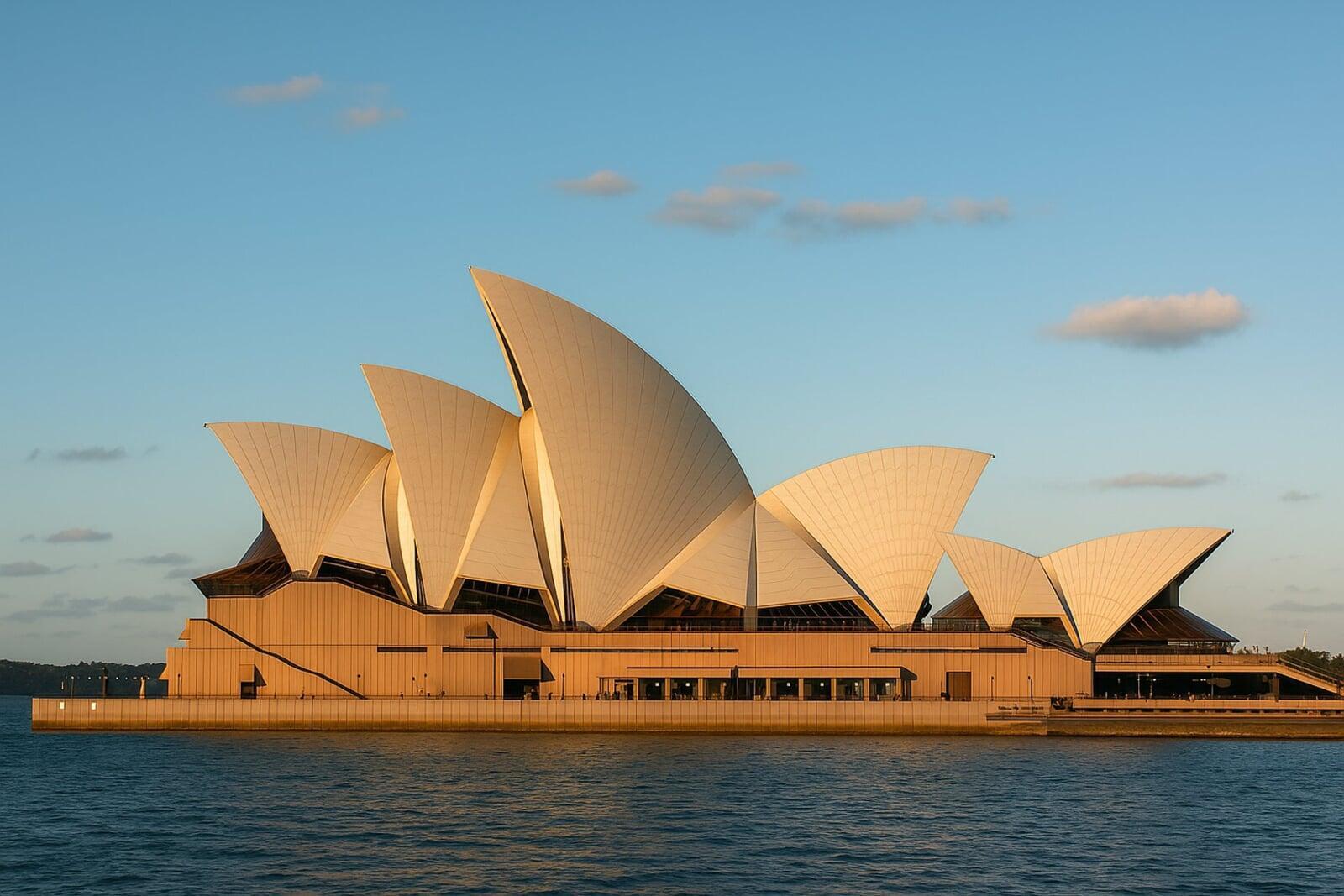
    The capital of New South Wales is Sydney, the site of the country's oldest European settlement and its largest and most cosmopolitan city, with ethnic communities from more than 100 countries. The city's icons include its cricket ground, Harbour Bridge and Opera House. Australia's major international gateway, Sydney hosted the 2000 Olympic Games.
  • Northern Territory (NT)
    The Northern Territory was administered by the State of South Australia until it was placed under federal government control in 1911.

    Darwin, the capital, is a modern city whose links with Indonesia and Papua New Guinea echo trade and migration patterns that pre-date European expansion into the Asia Pacific by many thousands of years.

    Alice Springs is the main town of central Australia. Southwest of 'the Alice' is the famous landmark of the red heart: Uluru, or Ayers Rock, a sandstone monolith of living significance to Australia's Indigenous people.

    Aborigines form a larger proportion of the population in the Northern Territory than elsewhere.
  • Queensland (QLD)
    With Brisbane as capital city, Queensland, Australia's north-eastern State, stretches from the temperate zone into the tropics. Its northern tip, Cape York, is separated from Papua New Guinea by the narrow Torres Strait. The corals of the Great Barrier Reef fringe the eastern coastline for more than 2000 kilometres. Annual rainfall ranges from four metres in the tropical northern rainforests to 0.2 metres on the Mitchell Grass plains of the southwest. The wide variety of natural habitats supports a great diversity of plants and animals.
  • South Australia (SA)
    European settlement in South Australia began in 1836. Adelaide, the capital, was a planned city, and retains much of its early architecture. The Adelaide Festival, held every two years, is an international cultural event.
    South Australia is the source of many fine wines. The wine-producing areas, including the Barossa Valley, are major tourist attractions. Industrial output includes steel, ship building and car manufacturing.
  • Tasmania (TAS)
    Separated from the continent by the waters of Bass Strait, Tasmania and its many companion islands form the smallest Australian State. The capital, Hobart, was established in 1803. Annual yacht races from Sydney and Melbourne bring ocean racers from around the world to Hobart.

    Tasmania has substantial farming, forestry, hydro-electric, mining and fishery industries as well as unique wilderness areas and a significant tourist industry. Its landscapes and colonial era buildings are major tourist attractions.
  • Victoria (VIC)
    Although Victoria is the smallest of the mainland States, it is the second most populous, and the most densely populated. Its capital, Melbourne, sprang up as the primary city of the Victorian gold rushes in the middle of the nineteenth century. During its boom Melbourne outgrew Sydney, and after Federation served as the national capital until Canberra was established. Melbourne has since lost its lead in population to Sydney, but remains the headquarters of a large number of business and financial organisations, as well as major manufacturing enterprises.

    Victoria's tourist attractions include spectacular coastal formations and heritage settlements, where the lifestyle and atmosphere of colonial times has been reproduced.
  • Western Australia (WA)
  • Western Australia is about the size of Western Europe, but has a population of less than two million. More than 70 per cent of its people live in the capital, Perth. Opportunities to serve niche markets in Asia provide an important stimulus to innovation in Western Australia. The State is a leading supplier of bulk ores for the world aluminium and steel industries. Other minerals produced include nickel and titanium, rare earths, gold and diamonds. With the development of major gas fields off its northwest coast, the State has become a source of bulk supplies of liquefied petroleum gas to North Asia.

* Information sourced from the Department of Foreign Affairs and Trade.

The People

Who is an Australian?

Australians come from all over the world. Some of our ancestors go back to the Aboriginal Dreamtime. Others were transported on the First Fleet, came to work on the gold fields or arrived as camel drivers in the outback more than one hundred years ago. For many of us, our parents or grandparent arrived after the Second World War. About one in four of us were born overseas. But all Australians, regardless of their background, share a commitment to Australia and its people.

The First Australians

Aboriginal and Torres Strait Islander peoples have inhabited Australia for at least 40 000 to 60 000 years. They have developed diverse cultures, grounded in a land-based spirituality, and adapted to Australian environments. Today Indigenous people contribute greatly to our nation across many fields, including the arts, media, sport, politics, academia, business and land management.

How is Australia made up?

Australia is a culturally diverse nation. The last Census in 2001 showed that about 2.4% of the population were Indigenous Australians and 23% of us were born overseas. Another 20% who were born in Australia have at least one parent born overseas. People from the United Kingdom are still the largest group of Australians born overseas, followed by New Zealanders.

Top ten countries of birth of Australians born overseas:


Top 10 countries of origin for Australians born overseas


The Anzacs

The Anzacs were troops of the Australian and New Zealand Army Corps who landed at Gallipoli on the 25th April 1915, during World War One. They fought a campaign lasting about eight months. Although fighting under British command, the men started the Anzac legend with their mateship and bravery. Some say that this was when Australia's national identity was born.

Migration

Migration involves people moving from one country to another. This may be voluntary, as migrants, or involuntary as displaced people or refugees. Some people decide to migrate to seek a better life for their children, better job opportunities or to be reunited with families who have migrated in earlier years. Australia is one of a handful of countries which operates a planned annual migration program. The program welcomes people of all backgrounds and represents a balance between Australia's national interest and international responsibilities.

Citizenship

Having Australian citizenship means you are a full member of the Australian community. It gives you certain privileges. You can apply for a passport, or receive help from the Australian consular officials while overseas. If you are old enough you can vote in elections, stand for Parliament, work in the Public Service and serve in the armed forces.

Your responsibilities as an Australian Citizen

As an Australian Citizen you are expected to:

  • Accept the basic principles of Australian society:
    • Parliamentary democracy
    • Freedom of speech and religion
    • Equality of opportunity
  • Obey the laws
  • Serve on a jury if called
  • Defend Australia if required

People born in Australia who have an Australian citizen parent or permanent resident parent are Australian citizens by birth. People born overseas to an Australian citizen parent can be registered as a citizen by descent if under 25 years of age.

People who migrate to Australia can apply for citizenship by grant.

Generally, people who migrate to Australia are eligible for Australian citizenship when they have lived in Australia as a permanent resident for 2 or more years. Other requirements include being of good character, understanding the responsibilities and privileges of citizenship.


The Flag

Australian Flag

History

When Australia became an independent nation in 1901 it needed a flag to identify itself to the world. A competition to design a national flag was won by five strikingly similar designs. Apart from a minor change in 1908, the flag has remained unchanged since then.

The flag first flew from the Exhibition Building in Melbourne on 3 September 1901. This date has been set aside as Australian National Flag Day.

The flag has accompanied Australians to the ends of the earth - it has been with them to war and on missions of peace; it is often seen on sporting fields of the world and on the roof of the world, and currently flies in Antarctica and in East Timor.

Design

The Australian flag is composed of three parts:

  • The Union Jack (British flag) in the top left corner,
  • The "Star of Federation" in the bottom left corner, and
  • The Southern Cross, taking up the right half of the flag.

The Union Jack shows that the first colonisation by Europeans was by Britain. The Star of Federation is a seven pointed star. They came to the number seven, by giving each state (six in all) a point on the star, and having one more point for Australia's territories (of which there are several). There are two mainland territories, and several overseas, including two in Antarctica. The Southern Cross is a constellation that can be seen from all of Australia's states and territories.

Information sourced from It's An Honour website and Flags of the World.

Return to Top